

































Black Stars Withdrawals: Injuries, Club Pressure and the Questions Facing Ghana
The Ghana Black Stars are facing a major player-availability challenge ahead of the 2027 Africa Cup of Nations qualifiers, with several players unavailable because of injuries, recovery concerns and late withdrawals. Mohammed Kudus, Antoine Semenyo, Jordan Ayew, Nathaniel Adjei and others have been affected, forcing head coach Carlos Queiroz to make significant changes to his squad.

But with so many changes happening around the same international window, questions naturally arise: are the withdrawals simply a consequence of genuine injuries, are club commitments playing a role, or does Ghana need to examine its wider player-management and medical processes? The available evidence points to several different circumstances rather than one single explanation.
1. The Black Stars Withdrawal List Is Growing
Ghana’s Black Stars withdrawals have become one of the biggest talking points ahead of the country’s opening 2027 Africa Cup of Nations (AFCON) qualifiers. What started with a few injury and fitness concerns has developed into significant changes to Carlos Queiroz’s original squad, with several players now unavailable or requiring further medical assessment.
The timing is particularly important. Ghana is scheduled to face Côte d’Ivoire in Bouaké on September 24, 2026, before hosting The Gambia in Accra on September 29. With only a short preparation period between the squad gathering and the first competitive match, every late change creates another challenge for the coaching staff.
Mohammed Kudus Leads the List of High-Profile Absences
One of the most notable Black Stars withdrawals involves Mohammed Kudus. The Tottenham Hotspur midfielder had been included in Queiroz’s original squad after returning from a lengthy injury lay-off, but he subsequently opted out to continue his recovery and work toward full fitness.
Queiroz explained that after further assessment and discussions with Kudus, the decision was made to protect his recovery rather than expose him to a possible setback.
That distinction is important because Kudus’ absence should not automatically be interpreted as a refusal to play for Ghana. The information currently available points to a fitness and recovery decision.
For more Ghana football updates, readers can also follow the Ghana Football Association for official squad announcements and team information.
Antoine Semenyo Adds to Ghana’s Attacking Concerns
Antoine Semenyo is another major name missing from the upcoming qualifiers. Ghana News Agency reported that Semenyo and Kudus would both be unavailable for the opening match against Côte d’Ivoire.
Semenyo’s absence reduces the attacking options available to Queiroz at a time when Ghana is preparing for a difficult away fixture.
The loss of two prominent attacking players means the coach must consider different combinations and potentially give greater responsibility to other forwards and attacking midfielders.
This is where squad depth becomes particularly important. International teams have limited opportunities to train together, so replacing established players shortly before a qualifier can require significant tactical adjustments.
Injuries Have Also Affected the Defence
The Black Stars’ withdrawals are not limited to attacking players.
The Ghana Football Association confirmed that additional players were brought into the squad because of medical uncertainties. The new additions include Jonas Adjetey, Alidu Seidu, Ebenezer Annan and Rockson Yeboah in defence, while Rahim Ibrahim was added in midfield.
The changes demonstrate how quickly an international squad can change when several players are unavailable at the same time.
Nathaniel Adjei is also among the players affected by injury, while Prince Kwabena Adu has been ruled out after suffering a head injury, according to reports surrounding the latest squad changes.
These absences create additional selection questions for Queiroz, particularly because defensive partnerships often depend on familiarity and communication.
The Original Squad Has Changed Significantly
Queiroz initially selected a 24-man squad, but the Ghana Football Association subsequently announced nine additions following medical uncertainties involving some players. The additions include Brandon Thomas-Asante, Mohammed Fuseini, Benjamin Tetteh and Felix Afena-Gyan in attack.
This means the final group preparing for the qualifiers is considerably different from the squad originally announced.
For a national team, this can affect several areas:
- Tactical preparation
- Player combinations
- Set-piece planning
- Defensive communication
- Attacking movement
- Training intensity
- Squad chemistry
The issue is not simply the number of players missing. It is also about when those players become unavailable.
Why Late Withdrawals Matter
Club teams generally have much more time to work with their players than national teams. A club can train several times a week throughout an entire season, while national-team coaches often have only a few days to prepare for competitive matches.
That makes late Black Stars withdrawals particularly significant.
Queiroz himself acknowledged the difficulty of constantly changing the national team squad. He said Ghana needs to find a way to build around a core group of players because repeatedly changing seven, eight or even 10 players makes continuity difficult.
For more Ghana sports and lifestyle coverage, readers can explore MyGHPages.
Not Every Absence Should Be Classified as a Withdrawal
Another important point is that not every unavailable player actually withdrew after being selected.
Thomas Partey, for example, was not included in the original squad because of injury concerns. That is different from a player being selected and subsequently withdrawing.
Similarly, some reported absences have been officially confirmed by the GFA, while others have appeared first in media reports and require careful verification.
This distinction matters when discussing the growing list because presenting every unavailable player as having “withdrawn” can create an inaccurate impression of what happened.
The official GFA announcement specifically referred to medical uncertainties when explaining the additional squad selections.
Ghana Is Responding With New Call-Ups
The response from the technical team has been to strengthen the squad rather than abandon the original plans.
The GFA announced nine additions covering defence, midfield and attack.
That gives Queiroz additional options ahead of the qualifiers and provides opportunities for players who may not initially have been expected to play major roles.
For those players, the circumstances could represent an important opportunity to establish themselves in the senior national team.
At the same time, being called up late can be challenging because a player has less time to become familiar with the coach’s tactical instructions.
Is There Evidence of Something Deeper?
The growing Black Stars withdrawals have naturally generated questions among supporters about whether there is a broader problem.
However, the currently available evidence does not establish one common reason behind all the absences.
The reported cases involve different circumstances, including injury, recovery from previous injuries and medical assessments. Kudus, for example, was withdrawn specifically so he could continue his recovery and rebuild his fitness.
That means it would be premature to treat the entire withdrawal list as evidence of a coordinated issue between players, clubs and the national team.
What is clear is that Ghana’s coaching staff has had to make significant changes shortly before an important AFCON qualifying campaign.
What the Growing List Means for the Black Stars
The immediate effect is that Ghana must prepare with a squad that is different from the one initially selected.
The Black Stars will need to integrate new players quickly while maintaining their tactical structure ahead of the Côte d’Ivoire match and the subsequent home fixture against The Gambia.
Queiroz has stressed the importance of player availability, commitment and accountability as Ghana seeks to establish a more consistent national-team core.
The next few matches should therefore provide an opportunity to see how effectively the reshaped squad can adapt.
Final Thoughts
The growing Black Stars withdrawals are undoubtedly a major development ahead of Ghana’s 2027 AFCON qualifying campaign. Mohammed Kudus and Antoine Semenyo are among the prominent absentees, while several defensive and attacking options have also been affected by injuries or medical concerns.
However, the available evidence points to different individual circumstances rather than one confirmed explanation for every absence.
Ghana has responded by adding nine players to the squad, giving Queiroz more options as preparations continue.
The bigger issue now is how quickly the new-look squad can develop cohesion and maintain competitive preparation despite the late changes.
For Ghana, the focus will shift from the withdrawal list to what happens on the pitch when the Black Stars begin their 2027 AFCON qualifying campaign.
Internal links:
- Ghana sports and lifestyle news
- The nutritional power of boiled eggs
- Healthy lifestyle and wellness guide
2. Mohammed Kudus’ Case Is Different
Among the latest Black Stars withdrawals, Mohammed Kudus’ situation stands out because the Ghana midfielder had only recently returned to the national team after a lengthy injury absence. His withdrawal ahead of Ghana’s 2027 Africa Cup of Nations qualifiers has therefore attracted considerable attention, particularly because he was initially named in Carlos Queiroz’s squad.
The Ghana Football Association confirmed that Kudus had returned to the Black Stars after recovering from an injury that had kept him out for approximately seven months. He was included in the original squad for the matches against Côte d’Ivoire and The Gambia, as well as Ghana’s international friendly against Morocco.
However, Kudus later withdrew from the squad as he continued his recovery process. The decision came after further assessment of his condition and discussions involving the player and the national team technical team.
Kudus’ Withdrawal Was Linked to His Recovery

Carlos Queiroz provided an explanation for the decision, saying that Kudus appeared to be progressing well initially but that his situation changed after he played more than 70 minutes. The coach said the priority became protecting the player’s recovery and avoiding a possible setback.
That detail is important when discussing the Black Stars withdrawals because it provides a documented explanation rather than leaving supporters to rely on speculation.
Kudus had already endured a significant period away from competitive football because of injury. Returning to the national team immediately after such a long absence could therefore require careful management of his workload.
For Ghana, the decision also highlights the difficult balance between wanting key players available for international matches and ensuring that players returning from injury are not rushed back before they are fully ready.
Why Kudus’ Absence Matters to Ghana
Kudus has become one of Ghana’s most prominent attacking midfielders and was expected to provide creativity and attacking quality during the AFCON qualifying campaign.
His absence means Queiroz must adjust his plans before Ghana’s opening qualifier against Côte d’Ivoire in Bouaké on September 24, 2026. Ghana will then host The Gambia in Accra on September 29 before travelling to Morocco for a friendly on October 4.
The timing makes the withdrawal particularly significant because national teams have limited preparation time compared with clubs.
A coach can spend weeks or months developing tactical relationships at the club level. With the Black Stars, however, players arrive from different clubs and countries and have only a short period to train together.
Losing a key player during that preparation period can therefore require changes to attacking patterns, midfield combinations and set-piece responsibilities.
This Is Not Simply a Case of Refusing Ghana Duty
The available evidence does not support describing Kudus’ withdrawal as a refusal to play for Ghana.
Queiroz specifically explained that the decision was taken to protect the player’s recovery process. The coach also acknowledged that national-team coaches cannot control every decision made within a player’s club environment.
That distinction matters because international football often creates strong emotions among supporters. When an important player is absent, questions about commitment can quickly emerge.
In Kudus’ case, however, the publicly documented explanation is centred on his fitness and rehabilitation.
For official information about Ghana’s national teams, supporters can follow the Ghana Football Association.
Kudus Had Only Recently Returned
The timing of the situation becomes clearer when looking at the original squad announcement.
The GFA said Kudus missed Ghana’s 2026 FIFA World Cup campaign because of injury and returned to the Black Stars after recovering from an injury that had kept him sidelined for seven months.
That means his return was already being managed as part of a longer recovery process.
A player coming back from a lengthy injury absence may need to rebuild match fitness gradually. Training, competitive minutes, recovery periods and physical workload all have to be considered.
For that reason, Kudus’ withdrawal should be viewed in the context of his recent rehabilitation rather than simply as another name on a list of players unavailable for Ghana.
The Club Versus Country Question
Kudus’ situation also raises the wider club-versus-country debate.
Players have responsibilities to their clubs throughout the season, while international windows give national teams opportunities to bring those players together.
When a player is recovering from injury, both sides have an interest in ensuring that the rehabilitation process is handled carefully.
Queiroz said the national team cannot control club decisions and that the information available about Kudus’ condition had changed during the period leading into the international window.
That does not establish that Tottenham Hotspur pressured Kudus to withdraw, nor does it establish any dispute between the club and Ghana.
Instead, the available information points to a situation where player fitness and recovery were the central considerations.
Ghana Has Had to Adjust Its Squad
Kudus’ withdrawal is part of a wider series of player-availability issues affecting the Black Stars.
The GFA subsequently added nine players to the squad following medical uncertainties involving some members of the original group. The additions included defenders Jonas Adjetey, Alidu Seidu, Ebenezer Annan and Rockson Yeboah, midfielder Rahim Ibrahim and forwards Brandon Thomas-Asante, Mohammed Fuseini, Benjamin Tetteh and Felix Afena-Gyan.
These changes give Queiroz additional options, but they also demonstrate how quickly a national-team squad can change.
The coach has previously stressed the importance of availability and consistency, arguing that repeatedly changing large numbers of players makes it harder to build a stable team.
You can also follow Ghana football and lifestyle updates for additional Ghana-focused coverage.
Could Kudus Return Soon?
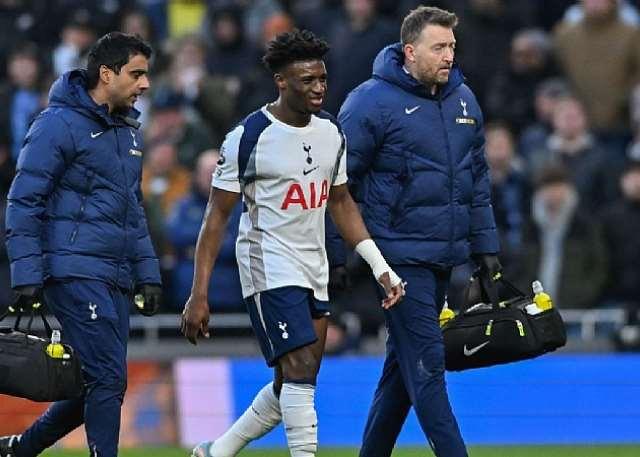
Queiroz indicated that the aim was to allow Kudus to continue training and playing so that he could be ready for a future international window.
However, the exact timing of a player’s return from injury can depend on several factors, including fitness, medical assessment and match readiness.
It would therefore be inappropriate to give a definite return date without an official update.
For Ghana, the immediate priority is to work with the players available for the AFCON qualifiers while allowing Kudus to continue his recovery.
What Kudus’ Withdrawal Means for the Black Stars
The biggest immediate consequence is tactical.
Without Kudus, Ghana loses one of its established attacking options and must identify alternative ways to create chances against Côte d’Ivoire and The Gambia.
The squad still contains attacking players such as Ernest Nuamah, Abdul Fatawu Issahaku and Ibrahim Osman, while Jordan Ayew remains among the experienced options available to the team.
That gives Queiroz several possibilities, although the exact formation and player combinations will depend on his tactical approach.
Kudus’ absence could also provide an opportunity for another player to take on greater responsibility during the qualifiers.
The Bigger Picture
The Kudus case demonstrates why not every one of the Black Stars’ withdrawals should be interpreted in the same way.
Some players are unavailable because of injuries, while others may require medical monitoring or additional recovery time. In Kudus’ case, the publicly stated reason is connected to protecting his recovery after returning from a lengthy injury absence.
There is currently no verified evidence that his withdrawal was caused by a dispute with Ghana or a deliberate attempt to avoid national-team duty.
Instead, the documented statements from Queiroz and the GFA point toward player welfare and recovery as the central issue.
Final Thoughts
Mohammed Kudus’ situation is one of the most closely watched cases among the latest Black Stars withdrawals, but the available evidence presents a relatively clear picture: he returned to the squad after a lengthy injury lay-off, his progress was reassessed, and the decision was made to allow him to continue his recovery rather than risk a setback.
For Ghana, his absence is undoubtedly an important squad change ahead of the 2027 AFCON qualifiers, but the decision also illustrates the importance of managing players carefully after significant injuries.
The focus now shifts to how Queiroz adapts his attacking plans and how the available players respond when Ghana begins its qualifying campaign against Côte d’Ivoire.
For broader Ghana football coverage, readers can also explore Ghana sports and lifestyle stories and healthy lifestyle information.
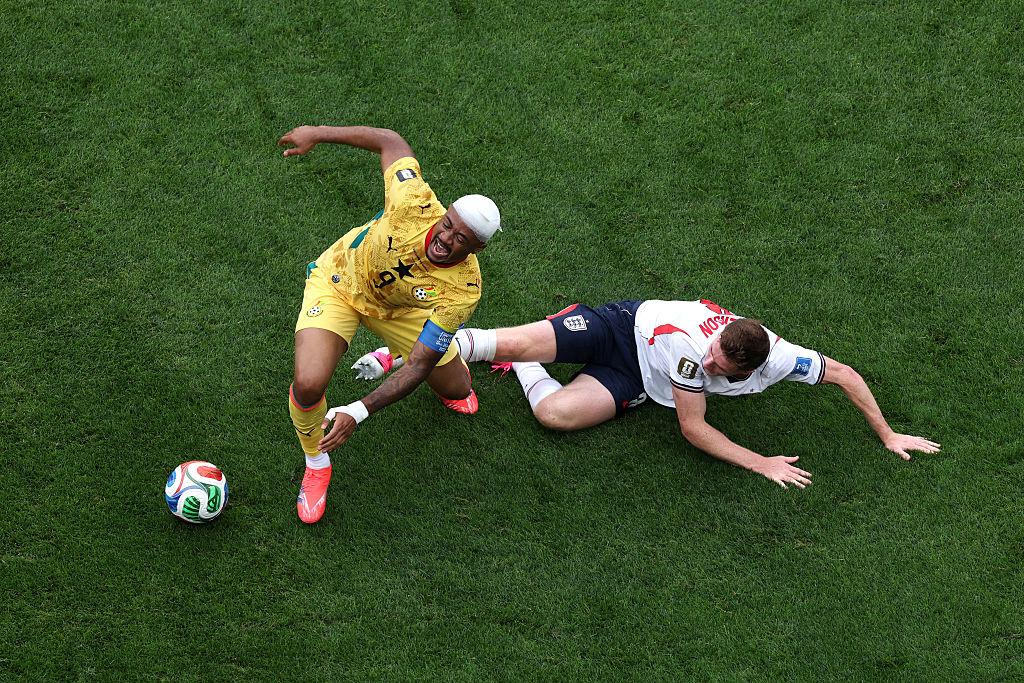
5. Antoine Semenyo’s Withdrawal Hits Ghana’s Attack
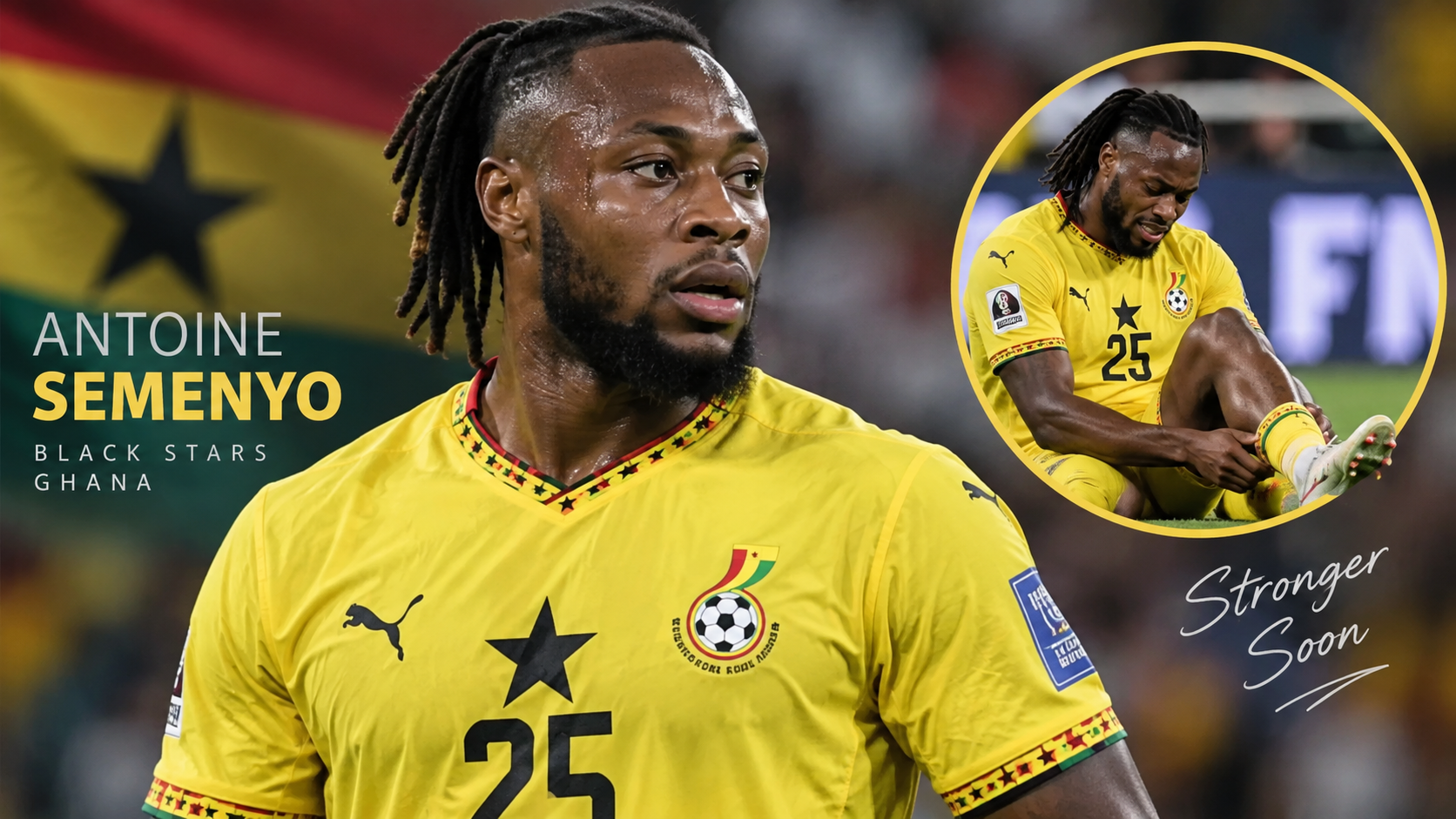
The latest Black Stars withdrawals have created another major concern for Ghana’s attacking options, with Antoine Semenyo unavailable for the opening 2027 Africa Cup of Nations (AFCON) qualifier against Côte d’Ivoire. His absence comes at a difficult time for Carlos Queiroz, who is already dealing with the withdrawal of Mohammed Kudus and other player-availability issues. Ghana News Agency confirmed that both Kudus and Semenyo would be unavailable for the encounter in Bouaké. (Ghana News Agency)
Semenyo has become an important attacking option for Ghana, particularly because of his ability to operate with pace and physical strength. His withdrawal means Queiroz must make further adjustments to an attack that has already lost one of its key creative players.
Semenyo’s Absence Comes at a Difficult Time
Ghana’s opening AFCON qualifying match against Côte d’Ivoire is scheduled for September 24, 2026, in Bouaké. The Black Stars will then return home to face The Gambia in Accra on September 29. (Ghana News Agency)
The timing of Semenyo’s withdrawal therefore gives Queiroz limited time to reorganise his attacking plans.
National teams have considerably less preparation time than clubs. Players arrive from different teams and leagues, often with different tactical systems, before having only a few training sessions together.
When a key attacker becomes unavailable shortly before a competitive fixture, the coach has to make changes quickly.
For Ghana, the challenge is even greater because Kudus is also unavailable for the Côte d’Ivoire match.
Why Antoine Semenyo Is Important
Semenyo provides Ghana with an attacking profile that can be difficult for defenders to handle. His pace, strength and ability to carry the ball can give the Black Stars another way of progressing from midfield into the final third.
His absence removes one of those options.
The Ghana News Agency reported that Semenyo’s late withdrawal had forced Queiroz to rethink his plans for the opening qualifier, particularly because Ghana will need attacking pace and creativity against Côte d’Ivoire. (Ghana News Agency)
This means other attacking players could be asked to take on larger roles.
Ernest Nuamah, Abdul Fatawu Issahaku and Ibrahim Osman are among the attacking options available to Queiroz, while Jordan Ayew also provides international experience. (Ghana News Agency)
Semenyo’s Withdrawal Should Be Viewed Separately
With several Black Stars withdrawals happening around the same international window, it can be tempting to treat them as part of one larger issue.
However, the circumstances surrounding each player are different.
Kudus withdrew while continuing his recovery from a lengthy injury absence, while Semenyo’s absence has been reported as another player-availability issue. Ghana has also had concerns involving Nathaniel Adjei, Jan Gyamerah and Prince Kwabena Adu. (Ghana News Agency)
It is therefore important not to assume that all the withdrawals have the same cause.
The available reporting does not establish that Semenyo’s absence is connected to a dispute between his club and the Ghana Football Association.
Ghana Has Experienced Semenyo Injury Concerns Before
Semenyo has previously experienced injury-related interruptions with the Black Stars.
The Ghana Football Association reported in November 2025 that Semenyo left the national team camp because of a left anterior talo-fibula ligament sprain that was aggravated during Ghana’s match against Japan. (Ghana Football Association)
That earlier case demonstrates why player fitness needs to be assessed individually.
A footballer’s physical condition can change rapidly during a demanding club season, and an international window can arrive immediately after several competitive matches.
The fact that Semenyo has previously had an injury issue does not, by itself, explain his current absence, but it provides context for why medical assessments are important.
The Attack Must Now Adapt
Without Semenyo, Queiroz has fewer established attacking combinations available.
The coach could potentially use different combinations involving Nuamah, Fatawu Issahaku, Ibrahim Osman and Jordan Ayew. The exact formation will depend on the tactical plan selected for the Côte d’Ivoire match.
The Ghana News Agency identified these players among the attacking options available to the coach. (Ghana News Agency)
The change may also require midfielders to contribute more to the attacking phase.
When an established forward is missing, the responsibility for creating chances does not necessarily fall on one replacement. It can be distributed across the midfield, wingers and remaining forwards.
Late Withdrawals Affect Team Chemistry
One of the biggest challenges created by the Black Stars’ withdrawals is not simply replacing individual players.
It is maintaining team chemistry.
Attacking football often depends on players understanding each other’s movements. A winger needs to know when a striker will make a run. A midfielder needs to know where an attacker prefers to receive the ball.
These relationships normally develop through repeated training sessions.
When players are added or removed shortly before a match, the coaching staff has less time to develop those connections.
That is particularly important when Ghana is preparing for a difficult away fixture.
Ghana Has Added More Players
The GFA has responded to the growing list of unavailable players by bringing additional players into the squad.
According to the Ghana News Agency, the technical team added players including Jonas Adjetey, Alidu Seidu, Brandon Thomas-Asante, Mohammed Fuseini, Rahim Ibrahim and Ebenezer Annan as part of the response to the squad changes. (Ghana News Agency)
These additions provide Queiroz with more options.
For some of the newly called-up players, the situation also represents an opportunity to demonstrate their ability at the senior international level.
However, joining a squad late is not always easy. A player has to quickly understand the coach’s tactical instructions and establish communication with teammates.
Could Another Player Step Up?
Semenyo’s absence could give another Ghana attacker an opportunity to take on a bigger role.
Ernest Nuamah is among the players available to Queiroz and has previously returned to the Black Stars after recovering from a long-term injury. (Ghana News Agency)
Abdul Fatawu Issahaku and Ibrahim Osman also provide attacking alternatives.
For Ghana, the immediate objective is to find an effective combination from the players who are fit rather than focus solely on those who are unavailable.
International football often creates opportunities for players who were not originally expected to carry the largest responsibility.
The Côte d’Ivoire Match Creates a Major Test
Ghana’s opening qualifier against Côte d’Ivoire will be played in Bouaké.
The match brings together two major West African football nations and provides an immediate test for Queiroz’s reshaped squad.
The absence of Semenyo and Kudus changes Ghana’s attacking options, but it does not eliminate the team’s other attacking resources. Ghana News Agency reported that the Black Stars still have several options available in attack. (Ghana News Agency)
The tactical response from Queiroz will therefore be closely watched.
How Ghana replaces Semenyo’s pace, movement and physical presence could become one of the main tactical questions surrounding the match.
Semenyo’s Withdrawal Does Not Prove Club Pressure
The wider debate about Black Stars’ withdrawals has included questions about whether clubs influence players’ availability.
In Semenyo’s case, there is currently no verified evidence establishing that a club pressured him to avoid international duty.
The available information simply confirms that he is unavailable, while Ghana has had to make changes to its squad.
It is important to distinguish confirmed information from speculation, particularly when discussing injuries involving high-profile players.
The same approach should be applied to Kudus, Jordan Ayew and the other players affected by the current squad changes.
What His Absence Means for Ghana
Semenyo’s withdrawal means Ghana will have to begin its AFCON qualifying campaign without one of its established attacking options.
The Black Stars will need to compensate through collective attacking play, midfield creativity and contributions from the other forwards.
It also provides Queiroz with a chance to test the depth of his squad.
The coach has already spoken about the importance of maintaining a stable core, but the current situation has forced several changes. (Ghana News Agency)
The coming matches should therefore provide useful information about how Ghana’s squad performs when several established players are unavailable.
The Bigger Picture
The growing number of Black Stars withdrawals has created uncertainty around Ghana’s preparations, but Semenyo’s absence should not automatically be interpreted as evidence of a deeper problem.
The available evidence shows that Ghana is dealing with several player-availability issues at the same time.
The GFA and technical team have responded by bringing additional players into the squad, while Queiroz has maintained that the team can still compete despite the setbacks. (Ghana News Agency)
For Ghana, the priority is now to prepare the available players properly and establish an attacking structure capable of functioning without several important names.
Final Thoughts
Antoine Semenyo’s withdrawal is another significant development in the story of the Black Stars withdrawals ahead of Ghana’s 2027 AFCON qualifying campaign.
His absence removes an important attacking option just before Ghana travels to Bouaké to face Côte d’Ivoire. Mohammed Kudus is also unavailable, increasing the need for other attackers to take responsibility. (Ghana News Agency)
However, the available evidence does not establish that Semenyo’s withdrawal was caused by club pressure or any dispute with the national team.
Instead, Ghana must now focus on the players who are available. Ernest Nuamah, Abdul Fatawu Issahaku, Ibrahim Osman and Jordan Ayew are among the attacking options identified for the reshaped squad.
The situation will test Ghana’s squad depth and Queiroz’s ability to adapt his plans when established players are unavailable.
Internal links:
- Ghana sports and lifestyle coverage
- Nutrition and healthy lifestyle information
- The nutritional power of boiled eggs
External authority links used in the article:
6. Injuries Are Not a New Problem for Ghana

The current wave of Black Stars withdrawals has raised concerns because several players are unavailable at almost the same time, but injuries affecting Ghana’s senior national team are not a new development. The Black Stars have experienced periods in which multiple players were ruled out of international assignments because of different injuries and rehabilitation programmes.
The current situation ahead of the 2027 Africa Cup of Nations qualifiers is therefore part of a longer pattern of player-availability challenges rather than something that has suddenly appeared for the first time.
For the upcoming fixtures against Côte d’Ivoire and The Gambia, Ghana has already had to adjust its plans because of injuries and recovery concerns involving several players. Ghana News Agency reported that Nathaniel Adjei, Jan Gyamerah and Prince Kwabena Adu were among those unavailable, while Mohammed Kudus also withdrew after recently returning from injury. (Ghana News Agency)
Previous Black Stars Squads Have Also Been Hit by Injuries
The Ghana Football Association has previously documented significant injury lists before international competitions.
In May 2024, for example, the GFA confirmed that nine players were injured ahead of Ghana’s 2026 FIFA World Cup qualifiers against Mali and the Central African Republic. The list included Baba Iddrisu, Inaki Williams, Majeed Ashimeru, Joseph Paintsil, Nathaniel Adjei, Dennis Odoi, Daniel Amartey, Daniel Kofi Kyereh and Joseph Aidoo. (Ghana Football Association)
That episode shows that Ghana has previously entered important qualifiers without several established players.
The challenge is not limited to one position either. Injuries have affected defenders, midfielders and attackers at different points, making squad management an important part of international football.
Another Large Injury List Followed
The problem continued during subsequent international windows.
The GFA later reported that 12 players were left out of a Black Stars squad because of injuries, with the list including Alidu Seidu, Tariq Lamptey, Brandon Thomas-Asante, Abdul Mumin, Joseph Aidoo, Abdul Manaf Nurudeen, Abdul Fatawu Issahaku, Baba Iddrisu, Ibrahim Sulemana, Daniel Kofi Kyereh, Majeed Ashimeru and Joseph Paintsil. (Ghana Football Association)
The injuries varied considerably.
Some players were recovering from major knee problems, while others were dealing with muscle, ankle, quadriceps or tendon issues.
This is important because it demonstrates why it can be misleading to treat every Black Stars withdrawal as the result of the same circumstances.
A player returning from a serious knee injury may have a completely different medical situation from another player dealing with a short-term muscle problem.
Semenyo Has Also Experienced International Injury Problems
Antoine Semenyo’s current absence also has some historical context.
In November 2025, the Ghana Football Association confirmed that Semenyo had left the Black Stars camp because of a left anterior talo-fibula ligament sprain that had been aggravated during Ghana’s match against Japan. He was replaced during that game and returned to his club for further treatment. (Ghana Football Association)
His latest withdrawal should nevertheless be considered separately from that earlier injury.
Previous injuries can provide context, but they do not automatically establish the reason for a player’s current absence.
Injuries Can Change a Coach’s Plans Quickly
For a national-team coach, injuries can create a particularly difficult tactical problem.
Club managers normally work with their players throughout an entire season. They have regular training sessions, medical information and recovery programmes available to them.
National team coaches have much less time.
Players arrive from different clubs, leagues and countries, sometimes after playing demanding matches only a few days earlier. A coach may have only a short period to prepare a team before a competitive fixture.
That is why the loss of several players at once can have a greater effect on preparation than the number of missing players alone might suggest.
Carlos Queiroz has specifically spoken about the difficulty of repeatedly changing the squad. He said frequent changes make it harder to build continuity and argued that Ghana needs to develop a core group of players who can remain available. (Ghana News Agency)
The 2026 World Cup Period Also Shows the Importance of Fitness
Ghana’s preparations for the 2026 FIFA World Cup included players returning from lengthy injuries.
The GFA reported that Ernest Nuamah returned after recovering from an anterior cruciate ligament injury that had kept him out for more than a year. Abdul Mumin also returned following a long layoff caused by an ACL injury, while Alidu Seidu was another player returning to the squad after injury. (Ghana Football Association)
These examples demonstrate another side of the injury issue.
The story is not only about players withdrawing from squads. It is also about rehabilitation, medical management and eventually bringing players back into competitive football.
A player may technically be fit enough to return but still require careful management before playing a full international match.
Recovery Management Has Become Increasingly Important
Modern football places considerable physical demands on players.
Many Black Stars players compete in demanding domestic leagues and continental competitions before joining the national team. International fixtures then add travel, different training environments and additional competitive matches.
The GFA has highlighted the role of its fitness and medical staff in recovery and injury prevention. During Ghana’s 2026 World Cup campaign, the team used structured recovery sessions following matches, with players receiving different workloads depending on how much they had played. (Ghana Football Association)
That type of management is particularly relevant when Ghana has several matches within a short international window.
The Current Situation Is More Than One Player
The latest Black Stars withdrawals involve different positions and different circumstances.
Mohammed Kudus is dealing with recovery after a lengthy injury absence, while Semenyo is unavailable for the Côte d’Ivoire fixture. Other players have also been affected by injuries or medical uncertainties.
The GFA has responded by adding nine players to the squad, including Jonas Adjetey, Alidu Seidu, Ebenezer Annan, Rockson Yeboah, Rahim Ibrahim, Brandon Thomas-Asante, Mohammed Fuseini, Benjamin Tetteh and Felix Afena-Gyan. (Ghana Football Association)
That response gives Queiroz additional options while also highlighting how quickly a national-team squad can change.
Depth Becomes Important When Injuries Increase
One of the biggest lessons from Ghana’s previous injury problems is the importance of squad depth.
If a team depends heavily on a small number of players, several injuries can force major tactical changes.
But when multiple players are capable of stepping into different positions, the impact can be reduced.
Ghana’s current squad includes experienced players as well as younger players who can use the opportunity to establish themselves. GNA reported that players such as Jordan Ayew, Ernest Nuamah, Abdul Fatawu Issahaku and Ibrahim Osman remain among the attacking options available for the current qualifying campaign. (Ghana News Agency)
Injuries Can Also Create Opportunities
Although injuries are disruptive, they can create opportunities for players who were not originally expected to play major roles.
A late call-up can suddenly become a starter.
A young attacker can receive more minutes.
A defender previously competing for a squad place can become an important part of the team.
The additional players brought into the current Black Stars camp will have an opportunity to show that they can compete at an international level.
For Queiroz, this could provide useful information about the depth available to Ghana beyond the established names.
Medical Information Matters
The discussion surrounding Black Stars’ withdrawals also shows why medical information should be treated carefully.
An injury announcement does not always provide the complete medical picture. The severity, expected recovery period and rehabilitation plan can depend on assessments by club and national-team medical staff.
This is particularly important when players have recently returned from long-term injuries.
Kudus, for example, had returned to the national-team setup after a lengthy absence but later withdrew while continuing his recovery. Ghana News Agency reported that his decision was connected to his recovery and fitness management. (Ghana News Agency)
That is different from simply assuming that every withdrawal represents a disagreement or unwillingness to play.
Ghana Needs Better Continuity
The current injury situation has also brought attention to continuity within the Black Stars.
Queiroz has stated that Ghana cannot continually change large numbers of players and expect the same level of team development. His comments came while discussing the availability problems affecting the squad before the current AFCON qualifiers. (Ghana News Agency)
A stable core can help players understand one another’s movements, responsibilities and tactical expectations.
However, injuries will always be part of football.
The realistic objective is therefore not to eliminate injuries completely but to improve preparation, rehabilitation, player development and squad depth so that unavoidable absences have a smaller effect.
The Bigger Picture for the Black Stars
The history of injuries within the Black Stars shows that Ghana has faced similar challenges during previous qualifying campaigns.
The current situation is significant because several players are unavailable during the same international window, but it should be understood alongside the team’s previous experiences with injuries and rehabilitation.
For the present campaign, Queiroz has already responded by adding players to the squad and adjusting his options. The next step is to establish combinations among the available players and prepare them for the demands of the qualifiers.
The Black Stars withdrawals will remain an important storyline, but Ghana’s ability to manage those absences will ultimately depend on its squad depth, medical preparation and the performances of the players who are available.
Internal links:
The nutritional power of boiled eggs
8. Ghana Has Responded With Additional Call-Ups
The growing number of Black Stars withdrawals has forced Carlos Queiroz and the Ghana Football Association (GFA) to make significant changes to the squad ahead of the 2027 Africa Cup of Nations qualifiers. Rather than continuing with a reduced group, the technical team has brought in additional players to provide greater depth for the matches against Côte d’Ivoire and The Gambia, as well as the international friendly against Morocco.
The GFA confirmed that nine players were added following medical uncertainties involving members of the original squad. The additions include defenders Jonas Adjetey, Alidu Seidu, Ebenezer Annan and Rockson Yeboah; midfielder Rahim Ibrahim; and forwards Brandon Thomas-Asante, Mohammed Fuseini, Benjamin Tetteh and Felix Afena-Gyan. (Ghana Football Association)
The changes underline how quickly an international squad can evolve when injuries and recovery concerns emerge shortly before competitive fixtures.
Nine Players Added to the Squad
The additional call-ups give Queiroz more options across different areas of the pitch.
In defence, Jonas Adjetey, Alidu Seidu, Ebenezer Annan and Rockson Yeboah provide additional alternatives. Rahim Ibrahim strengthens the midfield, while Brandon Thomas-Asante, Mohammed Fuseini, Benjamin Tetteh and Felix Afena-Gyan give the coach more attacking options. (Ghana Football Association)
This is particularly important because Ghana has lost several players from the original group.
Mohammed Kudus withdrew while continuing his recovery, while Antoine Semenyo also became unavailable. Nathaniel Adjei, Jan Gyamerah and Prince Kwabena Adu have also been affected by injury concerns. (Ghana News Agency)
The additional players therefore help reduce the immediate impact of those absences.
The Changes Are Not Limited to Injured Players
Ghana’s squad adjustments have also included players receiving their first opportunities at the senior international level.
The GFA confirmed that Jan Gyamerah and Ronald Donkor received maiden Black Stars call-ups for the September international window. Gyamerah had made four appearances for SV Elversberg in the 2026/27 Bundesliga 2 season, while Donkor earned his opportunity after performances for New York Red Bulls. (Ghana Football Association)
These selections show that squad changes are not necessarily only about replacing injured players.
They can also provide an opportunity for players who have impressed at the club level to enter the national team environment.
New Faces Can Increase Competition
The arrival of additional players can create more competition for places.
A player brought into camp because of an injury-related vacancy is not automatically guaranteed a starting position. Once inside the squad, the player still has to adapt to the coach’s instructions and compete with the other available players.
For Queiroz, this gives him more choices when preparing for the qualifiers.
It also means players who were originally selected cannot assume that their position in the squad is secure if another player performs well during training.
Ghana Needs Depth Against Côte d’Ivoire
The timing of the additional call-ups is particularly important because Ghana’s first AFCON qualifier is against Côte d’Ivoire in Bouaké.
The Black Stars are facing the Ivorians on September 24 before returning home to play The Gambia on September 29. Ghana will then travel to Morocco for a friendly on October 4. (Ghana News Agency)
That schedule means the coaching staff needs enough players to manage the workload across several matches.
An expanded squad can give Queiroz more flexibility to make changes depending on fitness, tactical requirements and match conditions.
The Attack Has Been Particularly Affected
Ghana’s attacking department has experienced some of the most notable changes.
Kudus and Semenyo were both originally part of the squad but later became unavailable for the opening qualifier. Their absence removes two established attacking options from Queiroz’s plans. (Ghana News Agency)
The additional call-ups therefore become especially important.
Brandon Thomas-Asante, Mohammed Fuseini, Benjamin Tetteh and Felix Afena-Gyan provide alternative attacking profiles, while Jordan Ayew, Ernest Nuamah, Abdul Fatawu Issahaku and Ibrahim Osman remain among the other options available to the coach. (Ghana News Agency)
The final attacking combination will depend on Queiroz’s tactical plan and the condition of the players available.
Brandon Thomas-Asante Returns to the Conversation
Brandon Thomas-Asante is one of the players whose inclusion gives Ghana another option in attack.
His call-up comes at a time when the Black Stars have lost some of their regular attacking options through injury and recovery concerns.
A player such as Thomas-Asante can therefore become important during an international window where squad depth is being tested.
The same applies to Mohammed Fuseini, Benjamin Tetteh and Felix Afena-Gyan.
Each player now has an opportunity to show the coaching staff that he can contribute to the national team.
The Defensive Department Has Also Been Strengthened
The additional call-ups are not focused only on replacing attackers.
Ghana has also brought in several defenders.
Jonas Adjetey, Alidu Seidu, Ebenezer Annan and Rockson Yeboah were added following the medical uncertainties affecting the original squad. (Ghana Football Association)
That gives Queiroz more alternatives at the back and reduces the risk of having limited defensive options during a demanding international window.
Defensive depth is particularly important during away matches because the coach may need to adjust the team’s structure depending on the opposition.
Alidu Seidu Provides Experience
Among the defensive additions, Alidu Seidu is a familiar name around the Black Stars.
His return gives the technical team another experienced option in defence and allows Queiroz to consider different combinations at full-back or in other defensive roles.
The presence of experienced players can also help younger additions adapt to the demands of senior international football.
However, selection and starting positions will ultimately depend on training and the coach’s tactical decisions.
The New Players Have Limited Preparation Time
One of the challenges facing the additional call-ups is the limited amount of time available to prepare.
International football does not provide the same training opportunities as club football.
Players arriving from different clubs need to quickly understand the coach’s tactical instructions, learn their teammates’ movements and adapt to the team’s playing structure.
Ghana opened camp in Accra on September 21, with preparations beginning for the Côte d’Ivoire and The Gambia qualifiers and the Morocco friendly. (Ghana Football Association)
That gives the coaching staff only a limited period to integrate the new players.
Queiroz Has to Balance Experience and Freshness
The additional call-ups leave Queiroz with a mixture of experienced internationals and players looking to establish themselves.
That balance could influence his team selection.
Experienced players may provide familiarity with international football, while newer players can offer different qualities and energy.
The coach therefore has to determine which combinations best suit each opponent.
The opening match against Côte d’Ivoire could require a different tactical approach from the home fixture against The Gambia.
The Changes Also Test Ghana’s Squad Depth
The latest Black Stars withdrawals have effectively provided an early test of Ghana’s squad depth.
A national team needs alternatives because injuries, suspensions and club commitments can all affect player availability.
Ghana’s response has been to expand the group rather than rely on a small number of players.
Queiroz has also publicly acknowledged that frequent changes have made it difficult to build continuity, saying Ghana needs to develop a core group of players while improving availability and accountability. (Ghana News Agency)
The current squad changes therefore present both a challenge and an opportunity.
New Players Could Become Regulars
A late call-up does not necessarily have to remain temporary.
If one of the newly added players performs well, he could become a regular part of future Black Stars squads.
International football often creates opportunities unexpectedly.
A player may initially enter the team because another player is unavailable, then establish himself through performances.
The September qualifiers could therefore help Queiroz identify additional players who can contribute to the national team over a longer period.
The GFA Has Chosen a Practical Response
The GFA’s decision to add nine players demonstrates a practical response to the availability problems.
Instead of reducing the squad’s options, the association and technical team have attempted to maintain sufficient numbers across defence, midfield and attack.
This approach also allows Queiroz to make tactical changes without being restricted by a shortage of available players.
The GFA’s official announcement specifically stated that the additions followed medical uncertainties involving some players. (Ghana Football Association)
That distinction is important because it shows that the changes are being presented primarily as squad-management measures rather than evidence of a dispute with the unavailable players.
Ghana Still Has Important Players Available
Despite the withdrawals, Ghana’s squad still contains several established names.
The original squad included players such as Jordan Ayew, Ernest Nuamah, Abdul Fatawu Issahaku, Ibrahim Osman and other experienced internationals. (Ghana News Agency)
The availability of these players gives Queiroz a foundation around which to organise the team.
The additional call-ups then provide further alternatives.
This combination could allow the coach to experiment with different formations while maintaining experienced players within the starting lineup.
The First Test Comes in Bouaké
The effectiveness of Ghana’s squad changes will receive an immediate examination when the Black Stars face Côte d’Ivoire.
The match is scheduled for September 24 at the Stade de la Paix in Bouaké. Ghana’s preparations have been affected by the absence of Kudus and Semenyo, meaning other players will have to assume greater responsibility in attack. (Ghana News Agency)
The result will not by itself determine the success of the squad changes, but the match will provide an early opportunity to see how the reshaped group functions competitively.
The Gambia Match Provides Another Opportunity
After the Côte d’Ivoire fixture, Ghana will host The Gambia in Accra on September 29.
That second qualifier gives Queiroz another opportunity to assess his available players.
The coach could potentially use different combinations depending on injuries, fitness and the demands of the first match.
The Morocco friendly on October 4 then provides another competitive environment in which the technical team can assess players and combinations. (Ghana News Agency)
The Bigger Picture
The latest Black Stars withdrawals have forced Ghana to make changes earlier than the coaching staff would have wanted.
However, the additional call-ups also give Queiroz an opportunity to expand the pool of players available to him.
Jonas Adjetey, Alidu Seidu, Ebenezer Annan, Rockson Yeboah, Rahim Ibrahim, Brandon Thomas-Asante, Mohammed Fuseini, Benjamin Tetteh and Felix Afena-Gyan now have an opportunity to compete for places in a national team preparing for important qualifiers. (Ghana Football Association)
For the players, the situation represents a chance to demonstrate their value.
For Queiroz, it is another test of how quickly he can adapt his plans when his preferred squad changes.
Final Thoughts
Ghana’s response to the latest Black Stars withdrawals has been to strengthen the squad with additional call-ups rather than allow the absences to leave major gaps.
The nine additions cover defence, midfield and attack, giving Carlos Queiroz more options ahead of the Côte d’Ivoire and The Gambia qualifiers. (Ghana Football Association)
The new players will have limited time to integrate, but their arrival could prove important during a demanding international window.
The situation also creates opportunities for players who may not have been expected to play major roles when the original squad was announced.
With Ghana facing Côte d’Ivoire away, The Gambia at home and Morocco in a friendly within the same international period, squad depth and player management will remain central to Queiroz’s plans.
Internal links:
The nutritional power of boiled eggs
9. Is There Something Deeper Behind the Withdrawals?
The growing number of Black Stars withdrawals has naturally raised questions among Ghanaian football supporters. With Mohammed Kudus, Antoine Semenyo and other players unavailable around the same international window, some fans have questioned whether the situation points to something beyond ordinary injuries and recovery concerns.
However, the information currently available does not establish one common reason behind all the withdrawals. The circumstances surrounding the players are different, and the Ghana Football Association (GFA) and coach Carlos Queiroz have publicly described several of the changes in terms of injury, recovery and player availability. (Ghana News Agency)
That distinction matters when assessing what is happening with the Black Stars.
Different Players, Different Circumstances
The current list of unavailable players does not represent one single medical situation.
Mohammed Kudus was initially selected for the qualifiers after returning from a lengthy injury absence. Queiroz later explained that, following Kudus’ club appearance, the decision was made to give him additional time to recover properly rather than risk a setback. (MyJoyOnline)
Antoine Semenyo’s situation is different. He withdrew while dealing with a lingering ankle problem and requested to focus on his recovery. (MyJoyOnline)
Other players have also been affected by injuries or medical uncertainties.
That makes it difficult to treat all the Black Stars withdrawals as evidence of the same underlying issue.
Kudus’ Situation Has Received Particular Attention
Mohammed Kudus’ withdrawal generated significant discussion because he had only recently returned to competitive football.
He had been included in the original squad announced for the AFCON qualifiers against Côte d’Ivoire and The Gambia. After featuring for Tottenham, however, discussions between the player and Queiroz resulted in the decision to allow him more time to recover. (MyJoyOnline)
Queiroz also acknowledged that national-team coaches do not control everything that happens at club level.
His explanation indicates that the decision was based on the information available about Kudus’ condition and the desire to avoid a setback during his recovery.
That is different from evidence of a disagreement between Kudus and the Black Stars.
Semenyo’s Case Is Also Being Linked to Injury
Antoine Semenyo’s withdrawal has created another major talking point because of his importance to Ghana’s attack.
According to reporting by MyJoyOnline, Semenyo withdrew because he wanted to focus on recovering from a lingering ankle problem. The report also said he was prepared to undergo independent checks through the GFA. (MyJoyOnline)
The situation therefore involves a medical concern rather than publicly confirmed evidence of a dispute over international duty.
His absence nevertheless has a significant footballing consequence because Ghana was already dealing with Kudus’ unavailability.
Queiroz Has Acknowledged the Availability Problem
The coach himself has recognised that player availability has become a problem for the national team.
Queiroz said Ghana cannot repeatedly change large numbers of players and expect to develop the same level of continuity. He specifically referred to situations where seven, eight, 10 or even more players could change between international windows. (Ghana Football Association)
This is one of the clearest documented concerns surrounding the current situation.
The coach wants to build the team around a core group, but repeated injuries and availability issues make that process more difficult.
That does not establish that there is a deeper dispute behind the withdrawals. It does show that player availability is an issue Queiroz believes Ghana needs to address.
Could Club Football Be Part of the Challenge?
Club football naturally plays a major role in the availability of national-team players.
Ghana’s internationals play for clubs in different countries and competitions, with different training programmes and medical teams.
Queiroz specifically noted that national-team coaches cannot control decisions made by club coaches. His comments came while explaining the circumstances surrounding Kudus’ withdrawal. (Ghana Football Association)
This creates a complicated relationship.
A club has responsibility for the player’s day-to-day training and recovery, while the national team needs the player for international fixtures.
When a player has recently returned from injury, the two environments may have different priorities regarding workload and recovery.
That does not automatically mean there is conflict between the two sides.
The Number of Withdrawals Has Increased the Speculation
The reason supporters are asking whether there is something deeper is understandable from a football perspective.
Several players have become unavailable within a short period, while Ghana is preparing for important competitive matches.
GNA reported that Kudus and Semenyo are among the prominent attacking players unavailable for the Côte d’Ivoire match, while the technical team has also had to deal with other player-availability concerns. (Ghana News Agency)
The concentration of absences makes the situation look more serious than a single isolated injury.
But the number of withdrawals alone does not establish a common cause.
Ghana Has Responded With Additional Call-Ups
The GFA has not simply accepted the reduced squad.
Nine additional players were brought into the squad following medical uncertainties involving some of the original selections. The additions include Jonas Adjetey, Alidu Seidu, Ebenezer Annan, Rockson Yeboah, Rahim Ibrahim, Brandon Thomas-Asante, Mohammed Fuseini, Benjamin Tetteh and Felix Afena-Gyan. (Ghana Football Association)
This response suggests that the immediate priority is to maintain sufficient squad depth.
It also gives other players an opportunity to become more involved with the national team.
New Players Could Change the Conversation
The latest changes have opened the door for players who may not have been expected to play major roles at the beginning of the international window.
For example, Rockson Yeboah and Rahim Ibrahim received additional opportunities, while Jan Gyamerah and Ronald Donkor also earned maiden Black Stars call-ups during the current period. (Ghana Football Association)
If these players perform well, the conversation could gradually shift from who is missing to who is emerging.
That is one of the potential consequences of an injury-hit squad.
There Is No Public Evidence of One Coordinated Reason
Based on the publicly available information, there is currently no established evidence showing that the different Black Stars withdrawals are part of one coordinated action or that all the players are responding to the same issue.
The documented explanations include injury, recovery management and medical uncertainty.
Kudus’ case was explained by Queiroz as a decision to protect his recovery, while Semenyo’s withdrawal has been reported in connection with an ankle problem. (MyJoyOnline)
That does not mean every question surrounding the squad has been answered.
It simply means the available evidence does not currently support treating the withdrawals as one unified situation.
The Stability Issue Is More Clearly Documented
One area where there is a clear public concern is squad continuity.
Queiroz has directly spoken about the difficulty of building a team when large numbers of players change between international assignments.
He has called for a core group built around availability, commitment and accountability. (Ghana News Agency)
This is a different issue from alleging that players are deliberately refusing national-team duty.
It is about whether Ghana can consistently assemble the same group of players long enough to develop tactical understanding.
The 2030 World Cup Is Part of Queiroz’s Longer-Term Thinking
Queiroz has also spoken about rebuilding the Black Stars beyond the immediate AFCON qualifiers.
MyJoyOnline reported that the coach wants Ghana to begin laying the foundations for a team capable of qualifying for and competing at the 2030 FIFA World Cup. He sees the current AFCON qualifying campaign as part of that rebuilding process. (MyJoyOnline)
That long-term perspective makes player availability even more important.
A coach trying to develop a core group needs regular access to those players.
At the same time, injuries can create opportunities to discover alternatives who could eventually become part of that core.
Medical Management Is Becoming More Important
Another factor behind the current situation is the increasing importance of managing players who are returning from injury.
Kudus’ case is a clear example.
Rather than simply treating his selection as proof that he was completely ready for unrestricted international football, the technical team reassessed his situation after his club appearance.
Queiroz said the decision was made to protect the recovery process. (Ghana Football Association)
That approach illustrates why a player’s inclusion in an initial squad does not necessarily mean he will eventually play in every match.
Ghana Must Separate Facts From Speculation
The current debate around the Black Stars’ withdrawals shows why confirmed information is important.
It is reasonable for supporters to ask questions when several players are unavailable.
However, there is a difference between asking whether there is a deeper problem and having evidence that one exists.
At present, the documented information points to a combination of injuries, recovery management and player availability issues.
Further information from the GFA, club medical teams or the players themselves could provide additional context if circumstances change.
The Côte d’Ivoire Match Will Provide More Context
Ghana’s opening AFCON qualifier against Côte d’Ivoire in Bouaké will be the first major test of the reshaped squad.
The match is scheduled for September 24, with The Gambia following in Accra on September 29. Ghana will then face Morocco in a friendly on October 4. (Ghana News Agency)
The results and performances across those fixtures will give Queiroz more information about the depth of his squad.
They will also reveal which players can contribute when established names are unavailable.
The Bigger Question Is Squad Depth
Rather than focusing only on why individual players are absent, Ghana may also need to examine what happens when several important players cannot participate.
The current situation has exposed the importance of having alternatives in every position.
The additional call-ups give Queiroz more players to work with, while the emergence of younger internationals could gradually expand the pool available to the Black Stars.
That could become particularly important during future international windows when injuries or other availability issues arise.
Final Thoughts
The question of whether there is something deeper behind the Black Stars’ withdrawals will likely continue to generate discussion among Ghana supporters.
However, the information currently available points to different circumstances rather than one confirmed explanation.
Kudus’ withdrawal has been explained by Queiroz in terms of protecting his recovery, while Semenyo’s absence has been linked to an ankle problem. Other players have also been affected by injuries and medical uncertainties. (MyJoyOnline)
What is clearly documented is Queiroz’s concern about squad continuity.
The coach wants to establish a stable core, but repeated changes make that difficult. Ghana has responded by adding players to the squad and giving other internationals opportunities.
The upcoming AFCON qualifiers will therefore be important not only for the results but also for identifying which players can form part of the Black Stars’ longer-term structure.
Internal links:
- Ghana sports and lifestyle coverage
- Healthy lifestyle and wellness information
- The nutritional power of boiled eggs
10. What the Black Stars Need to Watch Next
The latest Black Stars withdrawals have created several questions around Ghana’s preparation for the 2027 Africa Cup of Nations qualifiers, but the focus now has to move toward the matches themselves. Ghana faces Côte d’Ivoire in Bouaké on September 24 before hosting The Gambia in Accra on September 29. The team will then travel to Tangier for a friendly against Morocco on October 4. (Ghana News Agency)
The opening fixtures will give Carlos Queiroz an opportunity to assess the players who remain available and determine how the reshaped squad can operate without several established names.
1. Ghana Must Monitor Player Fitness
The first issue is player fitness.
Several players have already withdrawn because of injuries, recovery concerns or medical uncertainties. Mohammed Kudus, Antoine Semenyo and other players have been affected, while the Ghana Football Association has added replacements to the squad. (Ghana Football Association)
That makes medical management particularly important throughout the international window.
Ghana cannot afford to lose more players unnecessarily, especially when the team has limited preparation time between matches.
For official national-team updates, supporters can follow the Ghana Football Association and Ghana News Agency sports coverage.
2. The Black Stars Need to Replace Missing Attackers
The absence of Kudus and Semenyo creates another major issue.
Both players were included in the original squad, but their availability changed before the opening qualifier. Kudus had recently returned from a long injury absence, while Semenyo was also unavailable because of an injury concern. (Ghana Football Association)
That means other attackers will have to carry more responsibility.
Ernest Nuamah, Abdul Fatawu Issahaku, Ibrahim Osman, Jordan Ayew and the newly added forwards will have opportunities to contribute.
The latest Ghana football developments can also be followed through MyJoyOnline Sports and Citi Sports.
3. Ghana Needs Better Squad Continuity
Queiroz has openly identified squad continuity as an issue.
The coach said Ghana cannot repeatedly change seven, eight or 10 players and expect the national team to develop properly. He wants to build the team around a core of players while emphasising availability, commitment and accountability. (Ghana News Agency)
This will be something to watch throughout the qualifying campaign.
The coach needs to identify players who can form a consistent core while also developing enough depth to cope with injuries.
More Ghana football coverage is available through Graphic Sports and 3Sports.
4. The New Call-Ups Need to Adapt Quickly
The GFA has added nine players following medical uncertainties in the squad.
The new additions include Jonas Adjetey, Alidu Seidu, Ebenezer Annan, Rockson Yeboah, Rahim Ibrahim, Brandon Thomas-Asante, Mohammed Fuseini, Benjamin Tetteh and Felix Afena-Gyan. (Ghana Football Association)
These players have limited time to understand the coach’s tactical instructions and develop combinations with their teammates.
Their performances could nevertheless become important because the current situation gives them an opportunity to establish themselves within the national team.
Supporters can follow additional Ghana football reports from GhanaWeb Sports and Pulse Sports Ghana.
5. The Côte d’Ivoire Match Will Be an Important Test
Ghana’s first assignment is away against Côte d’Ivoire in Bouaké on September 24.
CAF’s official fixture information confirms that Côte d’Ivoire and Ghana are in Group C, with the opening match scheduled for September 24 at 19:00 GMT. (Confédération Africaine de Football)
The match will be significant for assessing how the reshaped Ghana squad performs under competitive pressure.
The official continental competition information can be followed through CAF, while international football updates are available from FIFA.
6. The Gambia Match Will Bring Another Challenge
After the Côte d’Ivoire fixture, Ghana will host The Gambia in Accra on September 29.
CAF’s published schedule confirms the Group C fixture for September 29 at the Accra Sports Stadium. (Confédération Africaine de Football)
That match will give Queiroz another opportunity to assess his squad and make adjustments based on what happens in the opening game.
The Black Stars will have to manage recovery carefully because the two competitive fixtures are only five days apart.
For wider African football coverage, readers can also follow BBC Sport Football and Reuters Sports.
7. Ghana’s Midfield Must Take More Responsibility
With Kudus unavailable for the opening qualifier, the midfield may need to contribute more to Ghana’s attacking play.
The team will need players capable of progressing the ball, creating chances and supporting the forwards.
The exact midfield combination will depend on Queiroz’s tactical approach and the players available for each fixture.
More international football coverage can be found at ESPN Soccer and Sky Sports Football.
8. Ghana Must Avoid Further Disruptions
Another important issue is avoiding unnecessary additional disruptions.
The current squad has already experienced several late changes. Queiroz acknowledged that his original squad had been affected by injuries and fitness concerns shortly before the Côte d’Ivoire match. (Ghana Football Association)
With such limited preparation time, every additional absence makes tactical preparation more complicated.
The coach will therefore need to manage training loads, player fitness and recovery carefully.
9. Squad Depth Will Be Tested
The current situation provides a genuine test of Ghana’s squad depth.
A national team cannot always depend on its first-choice players because injuries and other availability issues are part of football.
The additional call-ups give Queiroz more alternatives and could allow some players to establish themselves as reliable options for future international windows.
Readers looking for wider football coverage can also visit The Guardian Football and Goal Football.
10. Ghana Must Keep the Long-Term Plan in View
Queiroz has said the current AFCON campaign is not only about the immediate fixtures.
The coach has spoken about building a stronger national team for future competitions while improving player development, infrastructure, logistics and medical capabilities. (Ghana News Agency)
That means the current international window can provide information beyond the results.
The coaching staff can assess which players are ready for international football, which combinations work and where further depth is required.
For additional international football news, readers can follow The Athletic Football and Eurosport Football.
The 2027 AFCON Qualification Schedule Matters
The 2027 AFCON qualifying campaign will be played across six matchdays.
CAF says Matchdays 1 and 2 run from September 24 to October 6, with the next international window scheduled for November 9–17, 2026, before the final two rounds take place from March 22 to 30, 2027. (Confédération Africaine de Football)
This means Ghana will have time between windows to evaluate performances and make adjustments.
The current squad therefore does not necessarily represent the final group that will contest every remaining qualifier.
The Black Stars Need to Use the Current Situation Carefully
The latest Black Stars withdrawals have created difficulties, but the reshaped squad also gives Queiroz an opportunity to identify alternative players.
The nine additions demonstrate that Ghana has options beyond the players who were originally selected. (Ghana Football Association)
The key issue will be how quickly those players can integrate and whether they can perform at the required international level.
The coach will also need to decide which players should become part of the team’s longer-term core.
Supporters Will Be Watching the Selection Decisions
The selection decisions made during this international window will attract considerable attention.
Who starts against Côte d’Ivoire?
Who replaces the unavailable attackers?
Which new players receive opportunities?
How does Queiroz adjust his tactics?
These questions will become clearer once the matches begin.
Ghana supporters can also keep track of football developments through Adomonline Sports and YEN.com.gh Sports.
The Bigger Picture
The current situation should be viewed as part of Ghana’s preparation for a new AFCON qualifying cycle.
The Black Stars enter the campaign with a mixture of established internationals, returning players and emerging talents. CAF describes the 2027 qualification process as a six-matchday campaign involving 48 nations divided into 12 groups. (Confédération Africaine de Football)
Ghana’s opening two fixtures will therefore provide an early indication of how the reshaped squad is adapting.
The team will also have the Morocco friendly on October 4, giving Queiroz another opportunity to assess his options. (Ghana News Agency)
Additional football reporting is available through Ghana SoccerNet and Modern Ghana Sports.
Final Thoughts
The immediate priority for Ghana is now clear: manage the available players carefully, integrate the new call-ups and prepare for the demanding fixtures ahead.
The Black Stars withdrawals have changed Queiroz’s original plans, but the coach has responded by bringing additional players into the squad. The GFA has confirmed nine additions following medical uncertainties, while Queiroz has stressed the importance of building a consistent core. (Ghana Football Association)
The opening match against Côte d’Ivoire on September 24 will provide the first competitive test of this reshaped group, followed by the home fixture against The Gambia on September 29. (Confédération Africaine de Football)
For Ghana, the coming matches will be about more than individual replacements. They will provide the coaching staff with an opportunity to assess squad depth, player readiness, tactical combinations and the foundations of the team Queiroz wants to develop for the future.
- Ghana Football Association
- Ghana News Agency
- CAF
- FIFA
- MyJoyOnline
- Citi Sports
- Graphic Sports
- 3 Sports
- GhanaWeb
- Pulse Sports
- BBC Sport
- Reuters Sports
- ESPN Soccer
- Sky Sports Football
- The Guardian Football
- Goal
- The Athletic Football
- Eurosport Football
- Ghana SoccerNet
FAQ
1. What are the latest Black Stars withdrawals?
Several Ghana players have become unavailable ahead of the 2027 AFCON qualifiers, including Mohammed Kudus and Antoine Semenyo, while other players have also been affected by injuries and medical concerns. Ghana has responded by adding players to the squad.
2. Why did Mohammed Kudus withdraw from the Black Stars squad?
Kudus withdrew after returning from a lengthy injury absence, with his recovery and fitness management cited in reports surrounding his withdrawal.
3. Why is Antoine Semenyo unavailable?
Semenyo is among the players unavailable for Ghana’s opening AFCON qualifier, reducing the team’s attacking options ahead of the match against Côte d’Ivoire.
4. Who did Ghana add to the squad?
The GFA announced additions including Jonas Adjetey, Alidu Seidu, Ebenezer Annan, Rockson Yeboah, Rahim Ibrahim, Brandon Thomas-Asante, Mohammed Fuseini, Benjamin Tetteh and Felix Afena-Gyan.
5. When will Ghana play Côte d’Ivoire?
Ghana is scheduled to face Côte d’Ivoire in Bouaké on September 24, 2026, in the opening round of the 2027 AFCON qualifiers.
6. When will Ghana play The Gambia?
Ghana is scheduled to host The Gambia at the Accra Sports Stadium on September 29, 2026.
7. Who is Ghana’s coach?
Carlos Queiroz is the current head coach of the Black Stars. Ghana retained him ahead of the 2027 AFCON qualifying campaign.
8. Are all the Black Stars withdrawals caused by the same issue?
No. The publicly reported circumstances differ between players and include injuries, recovery concerns and other medical uncertainties.